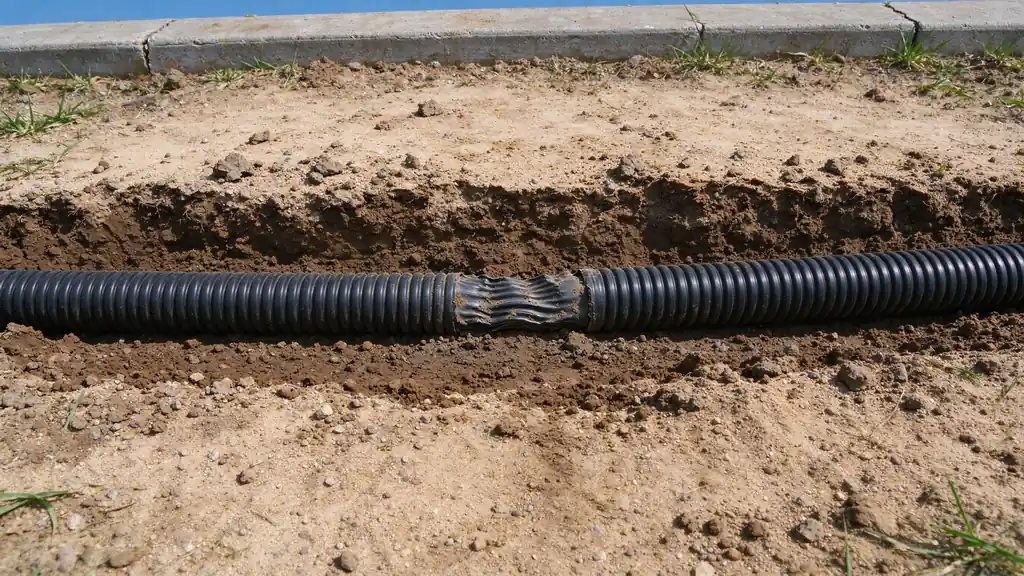
Drainage repair should address the failed part of the water route. Quay offers private-property drainage repair in Corpus Christi for problems involving collection, buried conveyance, connections and accessible outlets. The work may involve cleaning, a localized repair or replacement, depending on what is found. Recurring water does not automatically mean that every pipe needs to be replaced.
A useful repair scope distinguishes an obstructed grate from a damaged line, poor fall or a receiving point that backs up during rain. The failed-French-drain guide explains that separation. If the route or cause is uncertain, the inspection service can help establish the problem before a repair method is chosen.
Locate the failure within the whole route
Record which collection points are affected and whether the problem occurs only during rain. A single inlet bypassed by runoff suggests a different investigation from several connected basins remaining full together. Water emerging from a joint may reveal a symptom without explaining the restriction downstream. Share the sequence of events and any recent changes to paving, planting or roof discharge.
Compare current behavior with what was previously observed, while keeping uncertainty clear. A system that once worked may have a new obstruction or damage, but it may also be experiencing receiving conditions that were not present before. The standing-water guide helps organize a record. Do not enter a flooded area or open unsafe structures to investigate it yourself.
Separate collection problems from pipe problems
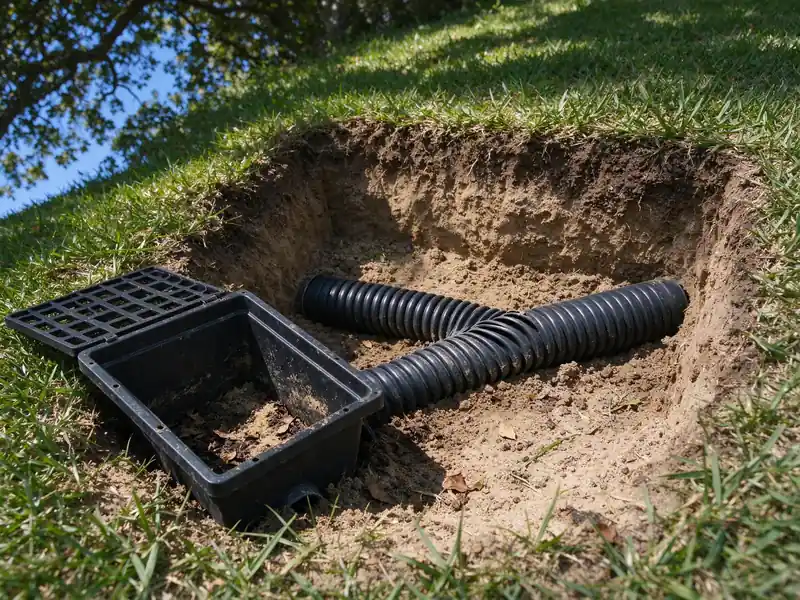
A clear basin cannot collect runoff that passes around it because the surrounding ground has changed. A French drain cannot receive water effectively if its collection zone is compromised, even when a connected pipe is open. A channel covered by debris may lose inlet area while the rest of its route remains usable. Each condition calls for a different repair decision.
Ask whether the problem lies at the surface approach, filter boundary, collection body or connected line. The surface-versus-subsurface guide explains those functions. Repair should preserve the intended mechanism rather than simply adding a larger grate or another buried line without showing how it receives the water responsible for the complaint.
Consider cleaning where a restriction is established
Sediment, leaves and other debris can accumulate in accessible collection areas and pipes. Cleaning may be appropriate where the route and condition support it, but the method needs to suit the installed material and access. A proposal should identify what is being cleaned, how access is obtained and how the result will be checked. No specific equipment method is assumed as part of every request.
Repeated obstruction deserves attention to the source of material. Soil washing into an inlet, an unsuitable filter or an accessible cover buried by landscaping can recreate the same problem. The maintenance guide explains routine checks and recurring-failure signals. Clearing a line without considering those causes may restore flow temporarily while leaving the reason for blockage unchanged.
Repair damage without losing the original function
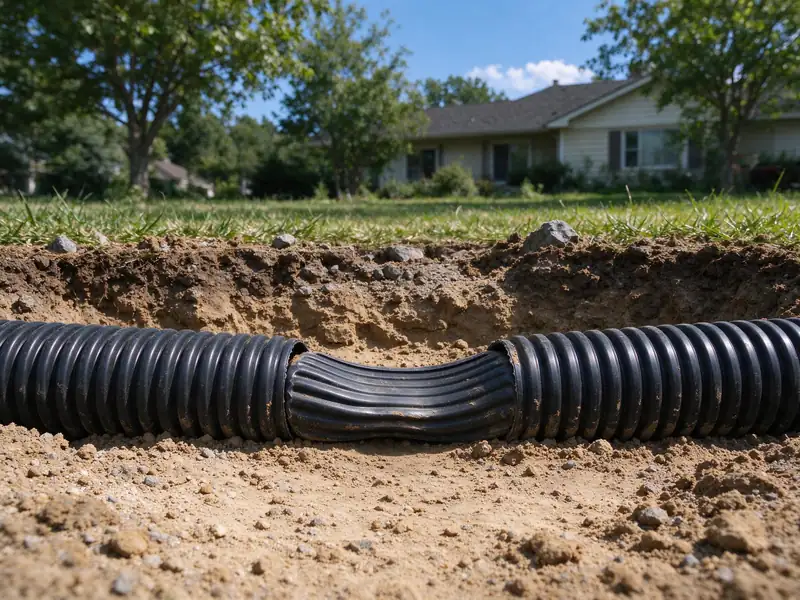
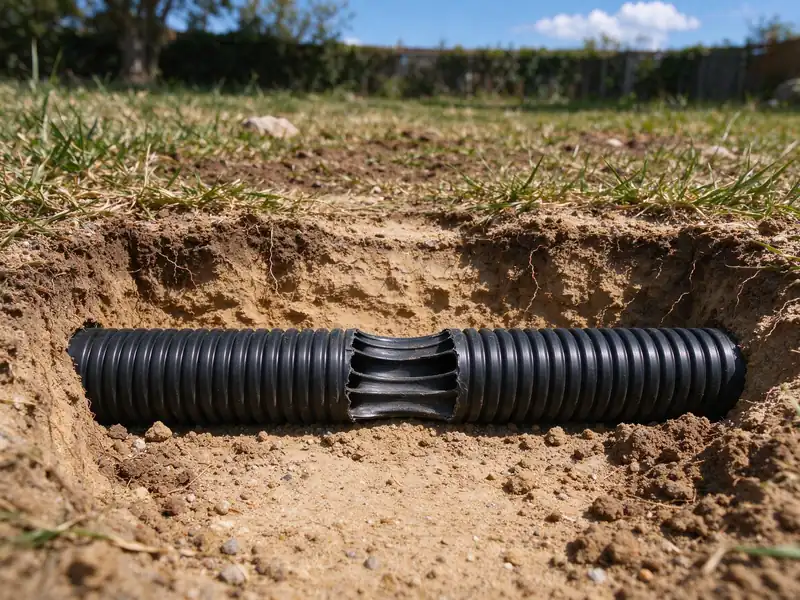
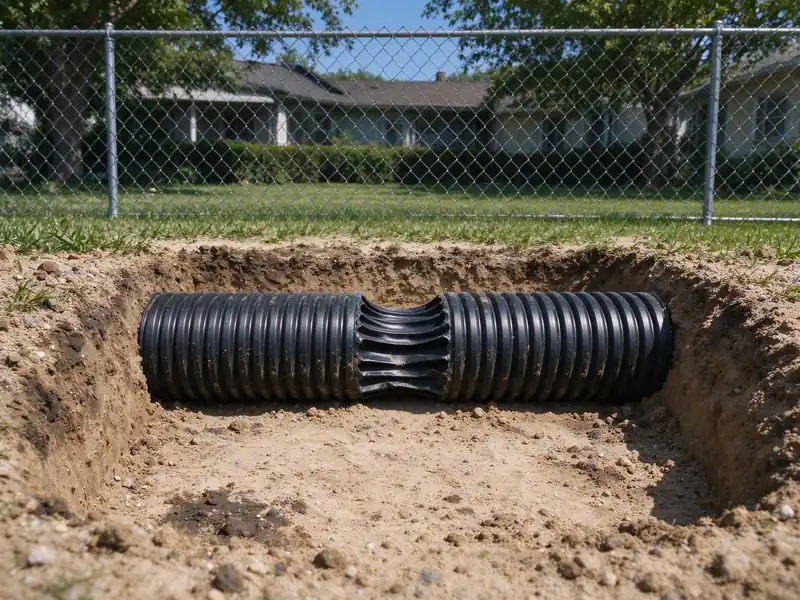
A localized damaged section or separated connection may allow a targeted repair when the surrounding route is sound. Confirm the pipe material, connection method and support of the repaired section. A replacement piece should maintain the intended collection or conveyance function and suitable fall. Joining incompatible components or leaving an unsupported transition can introduce a new defect.
The solid-versus-perforated pipe guide explains why those functions matter. A roof-water line should not begin releasing collected runoff through a substituted perforated section. Conversely, replacing part of a collection zone with solid pipe may reduce its ability to receive soil water. The repair description should make those transitions understandable before the work is concealed.
Check fall and receiving conditions before replacement
A clean, undamaged pipe may still perform poorly if its route has inadequate fall or its outlet is submerged. Replacement along the same alignment does not automatically correct either condition. Ask which elevations and receiving conditions support the proposed repair and what will change. A larger pipe does not lower the final receiving water or create an authorized public connection.
The no-gravity-outlet guide addresses conditional alternatives. Public-system constraints and coastal water need to remain separate from defects a private repair can correct. Read the private-drainage limits guide if the system backs up when surrounding receiving water rises. The scope should state that limitation instead of promising universal flood prevention.
Compare targeted repair with replacement
A short accessible defect can support a different decision from a route with multiple failures, unsuitable materials or no practical maintenance access. Compare what each option changes and what it leaves in place. A localized repair may reduce disturbance but retain other known limitations. Replacement may improve access or alignment but involve substantial excavation and restoration.
Ask what evidence supports the recommendation and which concealed conditions remain uncertain. The estimate checklist helps compare alternatives without treating the highest or lowest price as proof of suitability. Where more investigation is needed, an allowance or staged decision should be identified honestly rather than presented as a fully established fixed scope.
Define checks before backfill and the finished property
Repair work should include an appropriate check of the intended route before repaired connections become inaccessible. Clarify what that check demonstrates and what it cannot reproduce. A controlled flow test can help identify movement or a visible leak, but it does not simulate every rainfall, roof contribution or receiving-water condition. Keep those limits in the handover information.
Restoration needs its own definition. Lawn, paving, planting and equipment-access routes may all be disturbed. The installation and restoration guide helps identify what returns and which finish is included. Replacing a damaged pipe beneath a patio is different from rebuilding an entire patio, even when the repair requires a visible patch.
Price the investigated repair, not the symptom
Compare the estimate against the actual investigation, receiving route and agreed finish rather than treating a single unit price as the complete project. Access, investigation, cleaning method, damage extent, depth, materials, outlet work and restoration can each affect the scope. A blocked accessible inlet and a buried damaged route beneath paving are not comparable jobs. Ask which assumptions the estimate depends on and how additional findings will be handled.
Use the cost guide for supported budgeting context. Keep a record of the repaired route, access points and any maintenance recommendations so later changes do not compromise it. To request an estimate, describe the affected collectors, rain timing, known pipe route, previous repair information and access constraints. That gives the assessment a concrete starting point without committing to a repair method before the cause is established.
Check the collection boundary as well as the pipe
Clogged catch basins can lose accessible sediment storage, while a French drain’s filter fabric or surrounding collection material can become restricted. Those are different sediment-control failures from roots or crushed pipe farther along the route. An open conveyance line therefore does not establish that the collector still receives water effectively. Ask the repair recommendation to identify the affected boundary and explain how the proposed work restores its function without admitting unsuitable soil into the system.